Parent Support System That Works: Simple 14-Day Plan

A solid support system reduces overload, improves follow-through on routines, and gives families breathing room during hard weeks. The most effective support isn’t “more contacts”—it’s the right mix of people, clear asks, and simple systems that make help easy to accept and easy to give.
What a support system should actually do
“Support” isn’t just someone to call when things fall apart. A working parent support system covers the predictable pressure points, adapts to your current season, and prevents one person from carrying the whole load.
- Cover the predictable pressure points: childcare gaps, meals, school logistics, sick days, emotional load, and decision fatigue.
- Match support to seasons: newborn phase, return-to-work, school transitions, special needs services, or family illness.
- Create redundancy so one person isn’t the single point of failure.
- Protect relationships by setting expectations early (time, money, privacy, communication).
If you’re parenting a toddler or preschooler, the CDC’s Essentials for Parenting is a helpful reminder that consistent routines and calm, prepared responses matter—support systems make that consistency more realistic on busy weeks.
Start with a quick needs audit (10 minutes, no guilt)
The fastest way to build real-life help is to get specific about what’s actually hard. Skip the guilt and aim for clarity.
- List the top 5 recurring stress moments from the past two weeks (example: bedtime solo, school pickup conflicts, meal planning, night wakings, weekend overwhelm).
- Sort each moment into one of three buckets: practical help, emotional support, or professional support.
- Choose one “high-impact ask” for this week that would save the most time or reduce the most tension.
- Decide the smallest acceptable version of help (example: one pickup per week, one freezer meal, one check-in text on Mondays).
When stress is already high, it’s harder to problem-solve and follow through. The APA’s stress resources can help normalize what overload does to your patience, focus, and energy—especially when parenting demands are constant.
Build your support circle by roles (not by closeness)
It’s common to default to the people you’re closest to, then wonder why support feels inconsistent or complicated. A more practical approach: build by roles. Think of it like a bench—more than one person can cover a position.
- Identify 5 role categories: Emergency contact, Logistics helper, Emotional ally, Childcare buddy, Admin/errands support.
- Avoid over-relying on one “super helper”; assign at least two names per role when possible.
- Include non-family options: neighbors, school parents, coworkers, faith/community groups, babysitters, postpartum doulas, parent groups.
- Consider “micro-support” people who can reliably do tiny tasks (drop-offs, returns, grocery pickup).
Support Circle Map (fill in and reuse)
| Role | Who to ask | Best way to reach them | How often | Notes/boundaries |
|---|---|---|---|---|
| Emergency backup | Name 1 / Name 2 | Call/text | Only as needed | Medical info, pickup permissions |
| Weekly logistics | Name | Text | 1x/week | Pickup window, car seat details |
| Meals/household | Name | Text/app | 2x/month | Allergies, drop-off times |
| Emotional support | Name | Voice note | 1x/week | Listening vs advice |
| Professional help | Provider/service | Portal/email | As scheduled | Insurance, referrals, paperwork |
How to ask for help in a way people can say yes to
Most people want to help, but they need a request they can understand quickly—and either accept or decline without pressure.
- Use a clear, time-bound request: what + when + where + how long (example: “Could you do Tuesday pickup at 3:10 and keep them until 4:30?”).
- Offer options instead of open-ended asks: “Can you do A or B?”
- Make it easy to decline without awkwardness: “No worries if not—just checking.”
- Create repeatable scripts for common needs: meals, rides, childcare swaps, appointment coverage.
- When money is involved, say it upfront (example: gas money, babysitting rate, reimbursement timing).
If routines are getting disrupted by feeding challenges (which can domino into sleep and work schedules), keep a ready-to-use plan on hand. The Baby Bottle Refusal Rescue printable checklist is a quick reference you can share with a partner or caregiver so everyone responds the same way.
Put light structure around the support you’re building
Support falls apart when it relies on memory, improvising, or one exhausted person coordinating everything. The goal is “light structure”: just enough to make help repeatable.
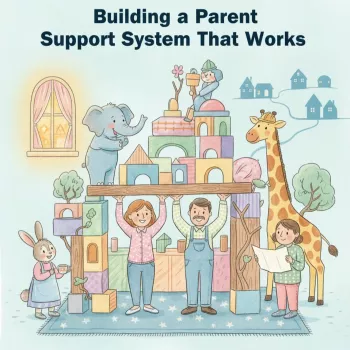
To make this easier to implement, the Building a Parent Support System That Works ebook guide can help you turn your roles, scripts, and boundaries into a repeatable plan you can update as your child’s needs change.
Common roadblocks (and what to do instead)
For more parenting guidance that supports healthy family routines and realistic expectations, HealthyChildren.org (American Academy of Pediatrics) offers practical, pediatrician-backed articles you can share with caregivers so everyone is aligned.
A simple 14-day reset plan to make support sustainable
Small bonus: if you’re preparing for a visit from a helper during the newborn phase, having comfortable, easy-to-layer outfits can reduce last-minute laundry stress. A simple set like the Cozy Cotton Newborn Baby Boy Sweater & Pants Set can be a practical “backup outfit” for diaper leaks or quick changes before appointments.
FAQ
What if there’s no family nearby to help?
Build your network by roles using neighbors, school/community connections, parent groups, and childcare swaps, then use paid support for the most predictable gaps. Start with small, repeatable help (one pickup, one meal, one weekly check-in) so it’s easy to sustain.
How do you ask for help without feeling like a burden?
Use specific, time-bound requests with an easy opt-out (“No worries if not”). Start small, and build reciprocity over time through swaps, gratitude, and clear expectations so support feels balanced.
How can both partners share the work of managing support?
Split the system: one partner manages the shared calendar/logistics while the other handles outreach and follow-ups, then rotate weekly. Keeping everything in one shared tool reduces duplication and missed messages.










Leave a comment